Why the area under the sink gets messy
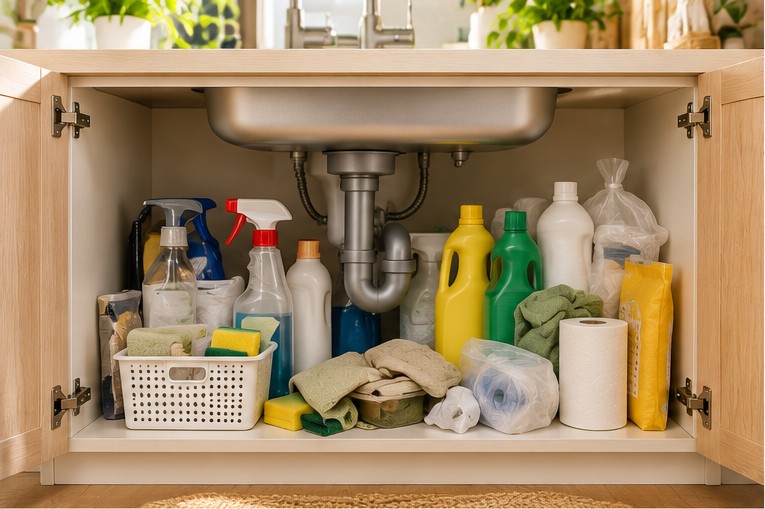
The cabinet under a kitchen sink has an unusual job. It needs to store everyday cleaning supplies while sharing its space with pipes, the drain, and sometimes a water filter or garbage disposal. The result is often a deep, awkward cabinet where small items disappear behind larger bottles.
The goal is not to fit the maximum number of things inside. It is to make the items you use regularly visible, reachable, and easy to put back.
Begin with a simple cabinet reset
Before buying organizers, take everything out. This gives you a clear view of the cabinet and helps you avoid choosing storage that does not fit your actual needs.
Empty the cabinet
Remove bottles, cloths, bags, spare sponges, and anything else stored underneath. Wipe the base and let it dry before putting items back.
Sort by what you use
Group everyday dishwashing supplies, surface cleaners, cleaning tools, spare items, and occasional-use products. Set aside anything empty, expired, leaking, or no longer needed.
Keep safety in mind
Store household chemicals in their original containers, follow their labels, and keep them away from children and pets. Avoid placing products where a leak or dampness could damage them.
Do not organize around products you rarely use. Give the easiest-to-reach space to the supplies you reach for most often.
Measure the cabinet—not just the shelf
Under-sink storage is rarely a simple rectangle. Pipes, hinges, cabinet doors, a disposal unit, and the opening width can all affect what will fit. Measure the usable space before comparing products.
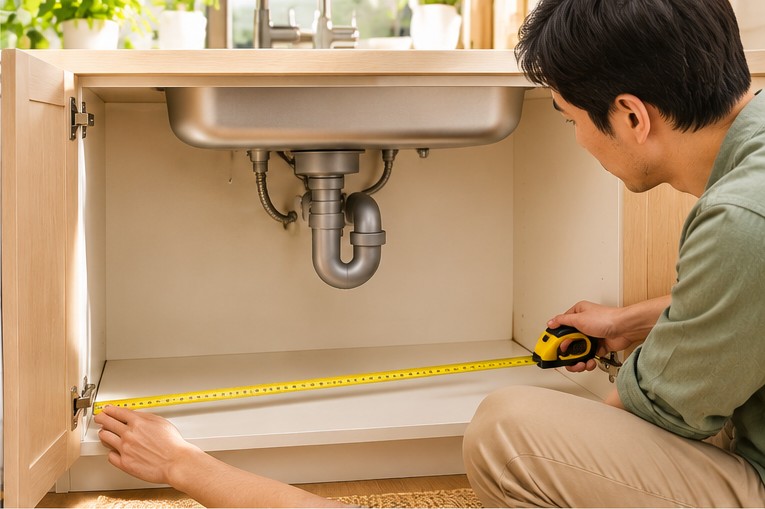
- Interior width: measure from side wall to side wall, and check whether hinges reduce the usable opening.
- Interior depth: measure from the back wall to the inside of the closed cabinet door.
- Clear height: check the space below the sink bowl and around pipes.
- Obstructions: note the position of drain pipes, shut-off valves, filters, and garbage disposals.
- Door clearance: make sure a pull-out basket or handle can move without hitting the door or plumbing.
Compare product dimensions with the cabinet's usable space—not its outside dimensions. Leave enough room to install, open, and remove the organizer comfortably.
Create simple zones that match your routine
Once you know what needs to stay, arrange the cabinet by task. A few clear zones can make the space easier to use without making the system complicated.
Daily cleaning essentials
Keep dish soap, sponges, brushes, and the supplies you use most often close to the front. A small tray or open bin can keep these items together.
Sprays and taller bottles
Group spray bottles in a stable bin or on a shelf where they remain upright. Check the height against the sink bowl and plumbing above.
Refills and occasional supplies
Place extra sponges, replacement cloths, and less frequently used products in a separate container toward the back or on a higher level.
Tools and cloths
Use a small basket for gloves, brushes, and reusable cloths. Make sure damp items can dry before being stored away.
Choose a storage style that fits your cabinet
There is no single organizer that works for every under-sink cabinet. The best option depends on your plumbing layout, cabinet dimensions, the items you store, and how often you need to reach them.
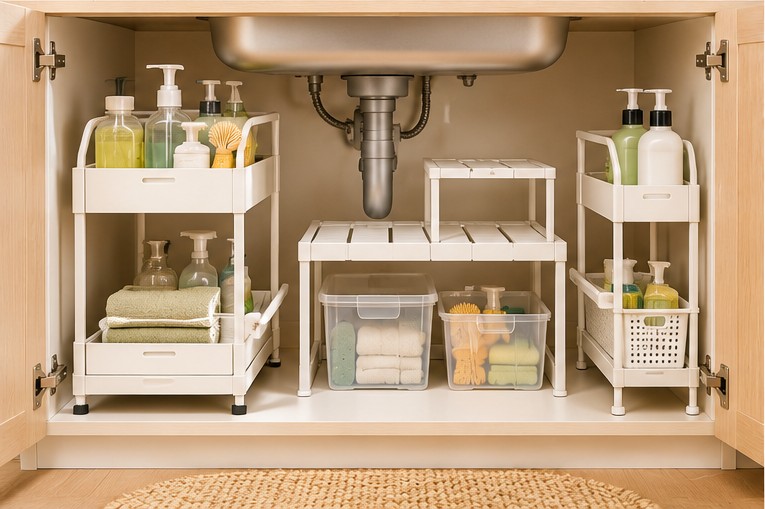
Two-tier organizers
Useful when you want to create separate levels for smaller supplies and taller bottles. Check the height available beneath the sink bowl.
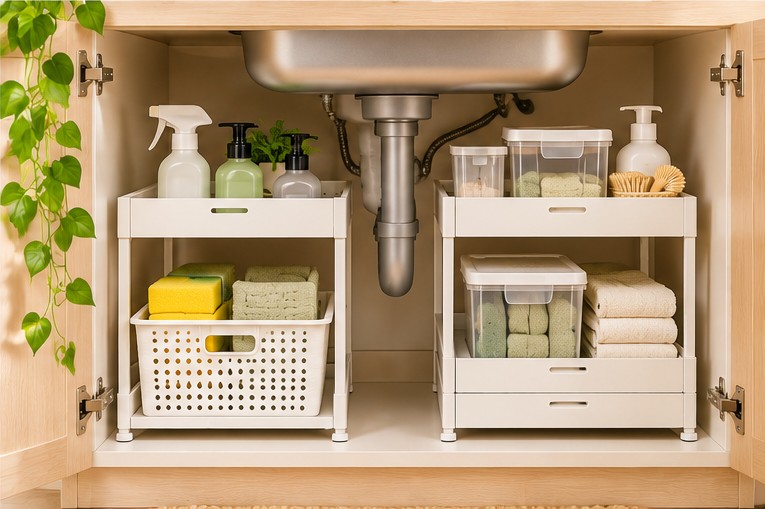
Pull-out storage
Can make items at the back easier to reach. Confirm that the drawer path clears pipes, hinges, and the cabinet opening.
Adjustable or expandable shelves
Helpful when the cabinet has awkward dimensions or when you want to adapt shelf height to different bottles and containers.
Bins and small baskets
A flexible choice for grouping cloths, refills, sponges, and smaller items. Choose easy-to-clean containers that are simple to lift out.
Some cabinets work best with a combination—for example, a compact shelf for bottles plus a removable bin for cloths. Keep the arrangement practical rather than trying to fill every inch.
Make the organization easy to maintain
A useful system should be quick to reset. Keep categories broad, avoid overfilling bins, and return items to the same place after each use.
- Leave a little open space so supplies are easy to remove.
- Wipe up spills promptly and check periodically for leaks or moisture.
- Review the cabinet when you restock cleaning products.
- Keep frequently used items at the front and occasional items farther back.
- Recheck the layout if you add a filter, replace plumbing, or change the products you store.
Explore Under-Sink Organizers
Compare different storage styles and brands in one place—from pull-out organizers and adjustable shelves to compact bins. Find an option that suits your cabinet, plumbing layout, and daily routine.
Browse Under-Sink OrganizersFrequently asked questions
What is the first thing to do when organizing under a kitchen sink?
Empty the cabinet, clean and dry the base, then sort the items you actually use. Measure the available space before choosing storage products.
How do I organize around pipes?
Map the pipe positions and available clearance first. Look for storage with a shape and dimensions that work around the plumbing, or combine smaller bins and shelves on either side.
Are pull-out organizers always the best option?
Not always. They can improve access, but they need enough clearance to slide out. Fixed shelves, adjustable organizers, and removable bins may work better in some cabinets.
What should I avoid storing under the sink?
Avoid storing items that can be damaged by moisture, and keep household chemicals in their original containers and safely away from children and pets. Follow product labels and local safety guidance.